
Uncategorized

Your Security Company Has Insurance — But Will It Cover You When You Get Sued?

When a business hires a security company, one of the standard questions is: “Are you licensed and insured?” The security company says yes, provides a Certificate of Insurance, and everyone moves forward. But there is a much more important question: Have you actually read the security company’s insurance policy and its exclusions? Because having insurance and having insurance that will respond to a security-related lawsuit are two very different things. In more than 40 years of owning and operating security companies, managing hundreds of client accounts, and working on security-related litigation and expert witness matters, I have seen firsthand how significant this issue can become. Yet in all those years, I cannot recall a single prospective client asking me: “Send me your actual insurance policy. I want to review the coverage and exclusions.” That is a mistake businesses cannot afford to make. 1. Assault & Battery Exclusions This may be one of the most important exclusions in a security company’s liability policy. Security work inherently involves human interaction. Officers may have to confront trespassers, remove individuals from private property, break up altercations, protect employees or customers, defend themselves, or detain someone until law enforcement arrives. Those interactions can lead to allegations of assault, battery, excessive force, false arrest, or related misconduct—even when the security officer believes his or her actions were completely justified. During my career, I have directly observed 18 security-officer-related lawsuits. All 18 involved allegations characterized as assault-and-battery-related claims. Consider a simple scenario: A security officer approaches a suspicious person and tells him to leave the property. A verbal confrontation occurs. The individual attacks the officer. The officer defends himself, takes the person to the ground, places him in handcuffs, and detains him for law enforcement. The officer may have acted appropriately. The client may believe the security officer did exactly what he was hired to do. But the individual can still file a lawsuit alleging assault, battery, excessive force, wrongful detention, or other related claims. If the security company’s insurance policy contains an applicable assault-and-battery exclusion, the insurer may deny coverage for claims arising from that incident. You hired a security company specifically to protect your business from dangerous situations. Yet the company’s insurance may exclude coverage arising from the very type of physical confrontation that security officers are hired to handle. A Certificate of Insurance alone will not necessarily tell you the whole story. Read the policy. Read the endorsements. Read the exclusions. 2. Limits of Liability — $300,000 May Not Be Enough Businesses should also examine the security company’s liability limits. Meeting the minimum insurance requirement imposed by a licensing or governing agency does not necessarily mean the security company carries enough insurance to adequately protect its clients. A $300,000 liability limit can disappear quickly once a serious lawsuit begins. Consider the potential costs associated with: In today’s litigation environment, $300,000 may provide very little protection following a catastrophic security incident. In my experience, a much stronger starting point for a professional security company is $1 million per occurrence with a $2 million aggregate. Depending on the client’s risk profile, location, industry, number of officers, armed versus unarmed services, and potential severity of loss, even higher limits or umbrella/excess liability coverage may be appropriate. Do not confuse “meeting the minimum requirement” with being adequately insured. 3. Are You an Additional Insured? This is another question every client should ask: “Will my company be named as an Additional Insured on the security company’s policy?” When a security incident results in a lawsuit, plaintiffs frequently do not sue only the security officer or security company. They may also sue the property owner, business operator, management company, landlord, or other organizations connected to the property. The allegation may be that the business negligently hired, retained, supervised, or relied upon the security provider—or otherwise shares responsibility for what occurred. Being properly named as an Additional Insured, subject to the actual policy terms and endorsement, may provide important protection to the client for covered claims arising from the security company’s operations. Do not simply assume you are covered because your security contractor has insurance. Ask for the Additional Insured endorsement and verify what protection it actually provides. 4. Industry and Operational Exclusions The fourth area businesses need to examine carefully is the policy’s exclusions. Security companies can work in higher-risk or specialized environments, including: A security company may have a liability policy and still have an exclusion that removes coverage for the exact type of facility or operation where its officers are working. Cannabis businesses are a particularly important example because marijuana remains federally restricted even though many states permit and regulate cannabis operations. If you operate a specialized or higher-risk business, do not simply ask whether the security company has insurance. Ask: “Does your insurance specifically cover security operations at my type of business?” Then verify it. The Cheapest Security Insurance Policy May Become the Most Expensive There is a reason some insurance policies cost substantially less than others. Coverage matters. Some security company owners may not fully understand their own policies. They obtain the insurance necessary to satisfy licensing or contractual requirements, receive their Certificate of Insurance, and assume they are protected. Others may understand the exclusions but accept the risk because broader coverage costs substantially more. Either situation can create enormous exposure for the client. And unfortunately, you usually discover the problem at the worst possible time: After the incident has occurred. The lawsuit has already been filed. Attorneys are involved. The security company submits the claim. Then the insurance carrier points to an exclusion and says: “This claim is not covered.” At that point, changing security companies, increasing coverage, or requesting an Additional Insured endorsement will not fix the problem. The incident has already happened. Before Hiring a Security Company, Ask for More Than a Certificate Before signing a security contract, businesses should consider having their insurance broker, risk manager, or qualified legal counsel review the security company’s actual insurance documents. At a minimum, examine:

Your Security Company Has Insurance — But Will It Cover You When You Get Sued? Read More »

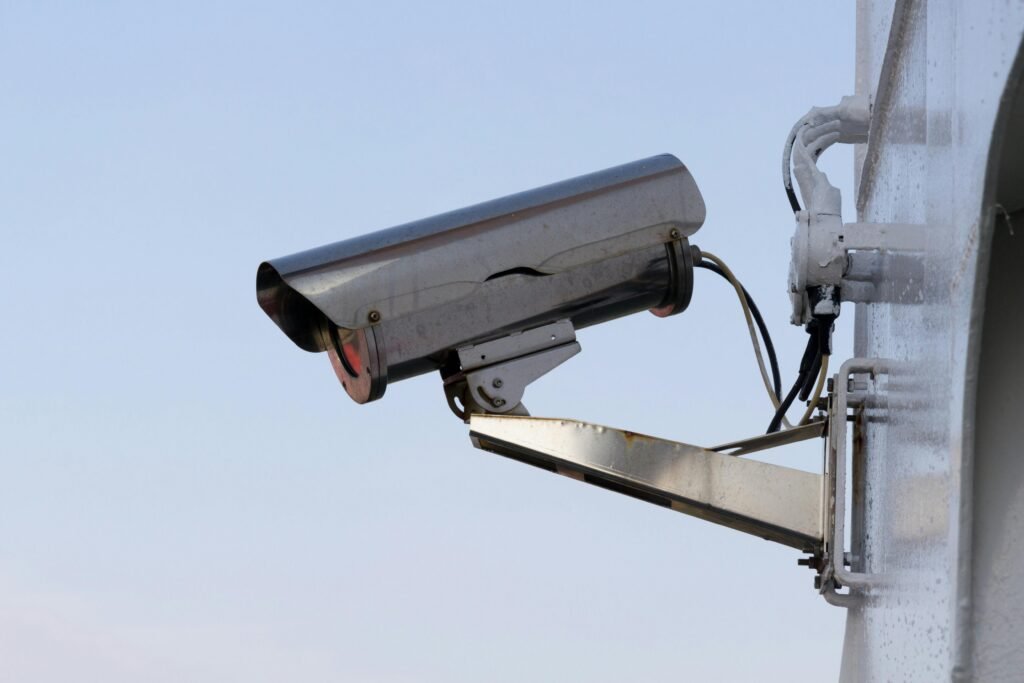
Close-up of an outdoor CCTV camera installed on a wall for security purposes.

Physical Security vs. Mobile Patrol vs. Remote Monitoring: What Actually Works? 

Businesses evaluating security options are often presented with three primary models: physical on-site security, mobile patrol services, and remote monitoring systems. Each has value, but they are not interchangeable. The effectiveness of any security program depends on how well the model aligns with risk, layout, and operational demands

Physical Security vs. Mobile Patrol vs. Remote Monitoring: What Actually Works?  Read More »

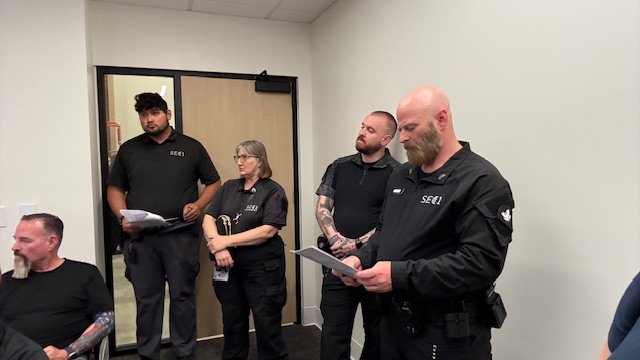
The SEC1 Commercial Security team doing a security inspection

The State of Commercial Security in Las Vegas (2026)

Las Vegas has always required a higher standard of security than most U.S. cities. The combination of tourism density, 24/7 operations, cash-heavy businesses, large events, and critical infrastructure creates a threat environment that continues to evolve. As we move into 2026, commercial security in Las Vegas is being shaped by three dominant forces: risk convergence, staffing realities, and active deterrence. 

The State of Commercial Security in Las Vegas (2026) Read More »

Security Man Looking At Moscow Kremlin On The Red Square In Moscow

Does Your Security Company Really Care About You?

A security company is more than a service, it is a relationship of care and trust. A security team needs to be invested in your safety, and the security company that manages them has to care about their safety. Both need your trust and understanding to do their jobs. That is the difference between an effective security force and an ineffective guard. Why We Said No to a Dangerous Security Contract Recently, I was asked to provide a security quote for a local professional office here in Las Vegas, Nevada. The office’s management strategist reached out to six different security companies—including ours—to bid for 24/7 coverage. The post was described as an “observe and report” position, meaning officers wouldn’t be expected to physically intervene. But as we listened to the details, things didn’t quite add up. The Walk-Through All six companies were invited to do a walk-through of the property. During the tour, the client pointed out several concerns: We were told our officers would be expected to do walk-throughs every 30 to 45 minutes, both day and night. During those patrols, they wanted our officers to approach and remove any homeless individuals they encountered. Here’s the problem:They also told us our officers couldn’t carry any defensive tools—no OC spray, no baton, no taser, no firearm, not even handcuffs. Just a phone and a flashlight. Before Negotiating a Security Contract Ask yourself the following questions: A professional security team invested in your safety should ask you those same questions. Our Response to the Client Below is an excerpt from the letter I sent to the potential client: From Chief Healea: Over the past five years, we’ve seen a massive increase in violent incidents involving the homeless population. In just the last two years, without any provocation, our officers have had axes and crowbars pulled on them and have endured two direct attacks—all after simply asking someone to leave private property. In every case, our officers acted professionally and safely detained the suspects. But these incidents highlight a very real danger. More than 80% of the homeless individuals we encounter are struggling with severe mental illness or addiction to substances like meth, fentanyl, or heroin. Because I care about the safety of my officers, I cannot place them in a position where they are expected to engage individuals at night, in the dark, alone, and unarmed. Where We Draw the Line Sadly, none of the other companies raised any concerns about officer safety. They were ready to take the contract—no questions asked. We hear stories all the time from officers who used to work for these companies. They tell us about being placed in dangerous situations with no training, no support, and no tools—all because their employer wanted to make a profit. That’s not who we are. At Sec1 Security, we believe it’s a company’s responsibility to protect its officers just as much as it protects its clients. That means: Pro Tip: A Security Company that doesn’t ask about the safety of their officers is not invested in the safety of your employees or customers. A Security Company does what’s right Some opportunities just aren’t worth it. No contract, no paycheck, and no client request is worth risking an officer’s life. Real security means doing what’s right, not just doing what pays. That’s what separates Sec1 Security from the rest. For peace of mind, contact us for a security assessment of your location. For those who already have a security team, visit our Training Courses for additional certifications and education. Chief Michael HealeaSecOne Security Group LLC Lic# 3092Michael@SecOneSecurity.com702-276-6979SecOneSecurity.com

Does Your Security Company Really Care About You? Read More »

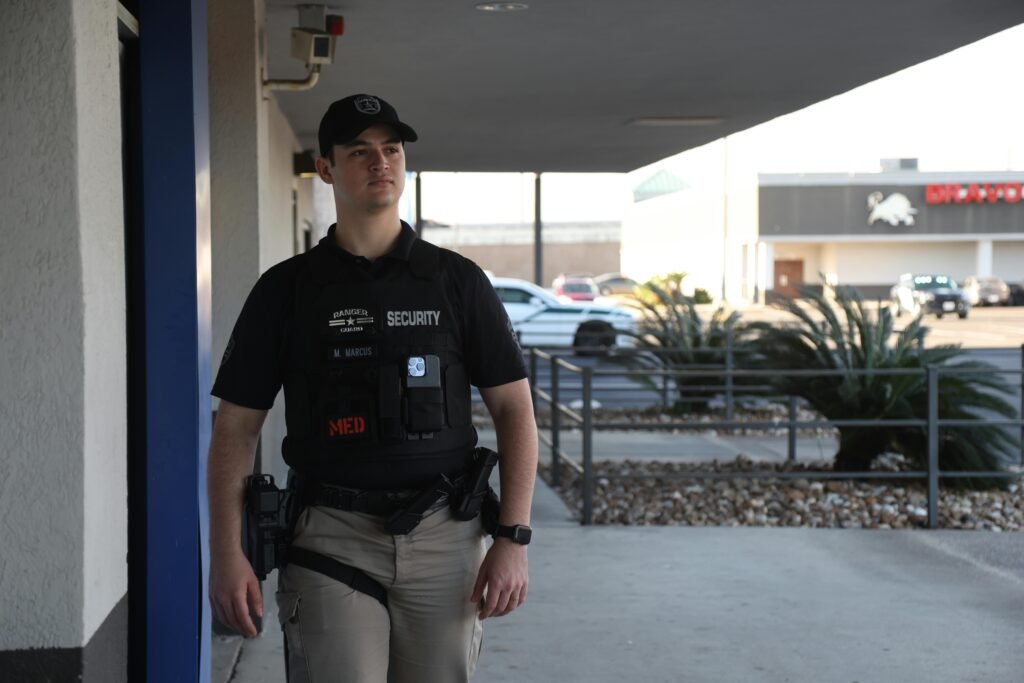
Security Officer Gear - Sec 1 Security

Top 11 Tools I use on Duty as a Security Officer

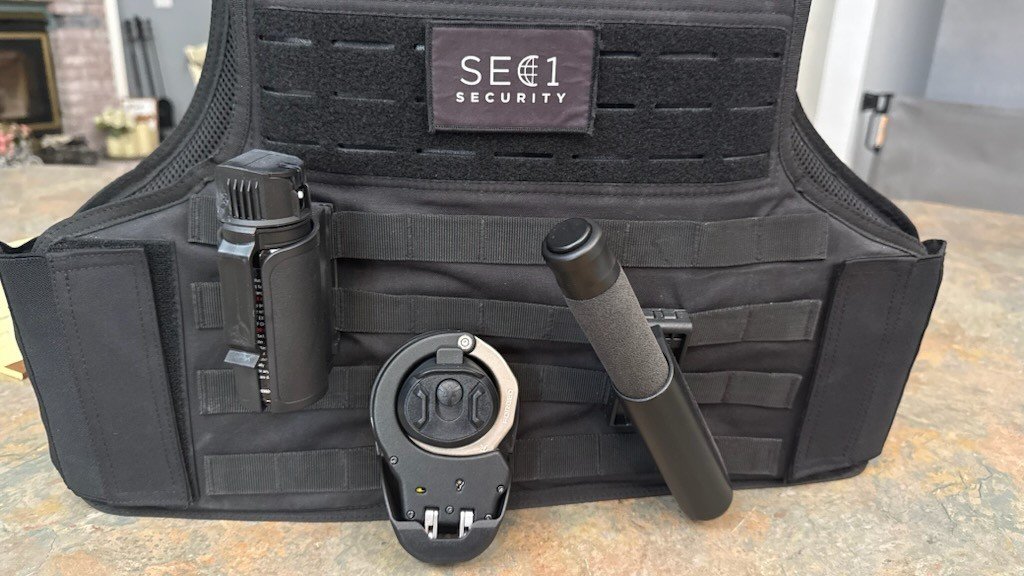
Blog by Deputy Chief Josh Healea In the security field, the tools you carry define your readiness, effectiveness, and safety. Every shift brings new situations, and the gear I rely on helps me stay prepared for anything—from routine patrols to high-risk encounters. For the security officers here at SEC1 Security, these are the top 11 tools we use on duty, each one essential in its own way.   1. K9 Partner My K9 partner is more than equipment—he’s a trusted teammate. A trained K9 elevates security presence and provides:  A K9 truly multiplies the effectiveness of any security operation.  2. A Firearm A firearm is a critical tool for defending life when all other options fail. With it comes responsibility, discipline, and the highest level of training. It’s there for the rarest but most dangerous moments. 3. Magazines for the Firearm Preparedness means having enough ammunition to address prolonged or evolving threats. Carrying extra magazines ensures:  4. Pepper Spray  Non-lethal and highly effective, pepper spray is perfect for:  It’s simple, fast, and one of the best tools for avoiding unnecessary injury.  5. Byrna Launcher The Byrna, a CO2-powered device similar to a handgun, provides a strong, less-lethal option before force escalates by delivering pepper-filled rounds or less-lethal kinetic rounds. It delivers:  It fills the tactical gap between verbal commands and deadly force.  6. Handcuffs Once a subject becomes non-compliant or a threat, handcuffs ensure safety for everyone involved. They’re essential for:  Every officer needs reliable cuffs within quick reach.  7. A Baton A baton gives an officer defensive reach and control. With proper training, it becomes a precise, effective tool for:  8. Bulletproof Vest Your vest protects your most valuable asset—your life. It provides:  Wearing body armor is a must every single shift.  9. Flashlight A flashlight is one of the most-used tools on duty. It’s crucial for:  A dependable light can make or break a situation. 9.  10. Patrol Vehicle Your patrol vehicle is your mobile command center. It enables:  Your patrol vehicle is one of the most powerful tools for coverage and presence.  11. Body-Worn Camera (Bodycam) A bodycam brings transparency and protection to every encounter. It’s essential for:  A bodycam keeps everyone honest and increases professionalism.  Final Thoughts These tools aren’t just items on a belt or in a vehicle—they’re the foundation of effective security work. Each one plays a unique role in helping me keep people safe, de-escalate situations, and perform my duties with confidence and professionalism.  If you want to be sure your business or building is secured with confidence and professionalism, contact us today for Security Services or to train your current security team with our Security Training Courses. Deputy Chief Josh Healea SecOne Security Group LLC Lic# 3092 Josh@SecOneSecurity.com  702-742-0746 SecOneSecurity.com 

Top 11 Tools I use on Duty as a Security Officer Read More »